
'It is going to be a tough balance for the RBI to manage economic stability and ensure smooth government borrowing.'

All 'important' issues will be up for deliberations, a BJP leader said of the meeting, adding the party is also likely to laud the central government for its handling of the COVID-19 pandemic, including the vaccination drive, and hail Prime Minister Narendra Modi for his development initiatives and successful foreign visits.

India's economy grew by 1.6 per cent in the fourth quarter of 2020-21, restricting the full-year contraction to 7.3 per cent, official data showed on Monday. The fourth quarter growth was better than the 0.5 per cent expansion in the previous October-December quarter of 2020-21. The gross domestic product (GDP) had expanded by 3 per cent in the corresponding January-March period of 2019-20, according to data released by the National Statistical Office (NSO).

RBI is expected to slash rates by 150 basis points till end-December 2016.

The main factor boosting production was a sustained rise in new work inflows.

The BJP continuing to look at the Dravidian polity through the religious prism has not worked in Tamil Nadu whereas it has yielded political and electoral results across much of the rest of the country, observes N Sathiya Moorthy.

The fiasco over error-ridden national accounts for the first quarter of the financial year has prompted Anant, who used to teach statistics at Delhi School of Economics, to initiate a documentation of processes. Besides, at the behest of the National Statistical Commission, he has ordered an audit of the methodology of preparing the index of industrial production (IIP).
In the quarter gone by (Q3 of FY22), private lender HDFC Bank issued around 950,000 credit cards, its highest ever credit card issuance in any single quarter. Since the Reserve Bank of India (RBI) revoked the embargo on it in August 2021 to issue new credit cards, the lender has issued 1.37 million credit cards. This is according to a senior bank executive, who was present in an analysts' call after the lender's Q3 earnings. In Q3, we achieved the highest ever issuance, with 950,000 card issuances.

Passenger vehicle wholesales in India increased by 17 per cent in the second quarter of the current fiscal year as buying sentiment improved and companies stocked up to cater to enhanced demand in the festive season, auto industry body SIAM said on Friday. According to the latest data by the Society of Indian Automobile Manufacturers (SIAM), passenger vehicles sales in the July-September quarter increased to 726,232 units from 620,620 units in the same period last year. Similarly, two-wheeler sales during the September quarter this fiscal rose marginally to 46,90,565 units as compared with 46,82,571 units in the same period last fiscal. However, commercial vehicles sales saw a dip of 20.13 per cent at 133,524 units in the quarter under review as compared with 167,173 units in July-September 2019.
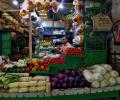
After unseasonal rains, supply disruptions and pandemic-induced woes pushed retail inflation well over the Reserve Bank's comfort zone in 2020, the scenario is likely to stay that way at least in the short term as economic recovery slowly gains foothold. For most part of this year, pricier food items pushed the retail inflation, based on Consumer Price Index (CPI), higher in the range of 6.58-7.61 per cent, except for March when the reading was 5.91 per cent. Experts believe retail inflation is likely to average around 6.3 per cent this fiscal and mostly will remain sticky going forward owing to pick-up in demand across sectors.

Auto-debit payment bounces have gone up for the second consecutive month in May, emphasising the stress building up due to a halt in economic activities as authorities lock down various parts of the country to stop the spread of the virus in the second wave. According to the National Automated Clearing House (NACH) data, in May, of the 85.7 million transactions initiated, 35.91 per cent, or 30.8 million transactions, failed.
The central bank's next monetary policy review is scheduled for April 5. It had kept the policy rate unchanged in its February meeting on fears of inflation.
Some of the top indebted companies likely to face financial headwinds in the coming quarters include NTPC, PowerGrid, Tata Steel, Adani Power, JSW Steel, UPL, and Steel Authority of India. Together these 201 companies owed Rs 14.9 trillion to their lenders at the end of September 30, 2019, up 4.1 per cent year-on-year (YoY) during the first half of FY20.

With domestic retail fuel prices jumping to record high on rising international oil rates, India on Thursday pressed oil cartel OPEC for 'affordable' oil price within a 'reasonable band' and that the producers should phase out production cuts. OPEC nations such as Saudi Arabia have traditionally been India's principal oil source. But, OPEC and its allies, called OPEC+, ignoring its call for ease supply curbs had led to the world's third-biggest oil importer tap newer sources to diversify its crude oil imports. As a result, OPEC's share in India's oil imports has dropped to about 60 per cent in May from 74 per cent in the previous month.

As part of the ritual, ''halwa'' is prepared in a big ''kadhai'' (large frying pot) and served to the entire staff involved in the Budget making exercise of the ministry. Halwa was served while maintaining COVID protocol with all present in mask and those distributing sweets were wearing gloves.

The RBI on Wednesday provided more time to exporters to collect payment of goods and software sold to overseas buyers and repatriate that to India, as the central bank announced more measures to deal with the economic fallout of the Covid-19 pandemic. The central bank has also decided to increase the limit of advances it gives to states and UTs by 30 per cent under the Ways and Means (WMA).

Exports in May 2012 stood at $24.77 billion.

Equities in India saw record FPI inflows of $16.8 billion in November and December, taking the benchmark indices to new highs.

Amid fears of a third wave of coronavirus pandemic and hardening of retail inflation, the Reserve Bank is likely to maintain status quo on interest rate and watch the developing macroeconomic situation for some more time before taking any decisive action on monetary policy. The RBI is scheduled to announce its bi-monthly monetary policy review on August 6 at the end of the three-day meeting -- August 4-6 -- of the Monetary Policy Committee (MPC). The RBI Governor-headed six-member MPC decides on the key policy rates.
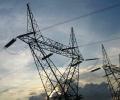
The statement comes in the wake of reports that warned of power crisis looming large due to the coal shortage in the country.

Flagging higher fuel prices in many opposition-ruled states, Prime Minister Narendra Modi on Wednesday called it "injustice" to people living there and urged the governments there to reduce VAT in "national interest" to benefit the common man. Modi raised the issue of many states not adhering to the Centre's call for reducing the Value Added Tax (VAT) on petrol and diesel after his government slashed excise duties on them in November last, and asked them to work in the spirit of cooperative federalism in this time of global crisis. Higher prices in some states were also harmful for neighbouring states, he added.
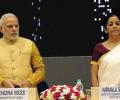
Prime Minister Narendra Modi on Thursday reviewed the impact of Covid-19 on the Indian economy and a possible second stimulus to boost sectors hit hard by the pandemic. Modi held discussions with Finance Minister Nirmala Sitharaman as the pandemic hit sectors from small industries to the aviation sector hard with millions of jobs at stake.

How should one billion Indians, for whom deprivation has become an inescapable way of life, join us in celebrating 75 years of Independence? And where do we go from here? asks Kalyan Singhal.

Sonia called for cancelling all public gatherings and poll rallies in view of the rising number of coronavirus cases.

'Aggressively stepping up vaccinations will constitute the most enduring stimulus of all in the coming quarters,' observes Sajjid Z Chinoy, Chief India Economist at J P Morgan.

Despite the relaxation of the one-child policy in 2016, the number of live births per 1,000 people fell to a record low of 10.48 in 2019, down from 10.94 in 2018.
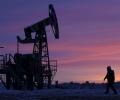
Indian refiners will buy less oil from Saudi Arabia next month as they snap up supplies outside of the Middle East as part of diversification drive amid weakening domestic fuel demand on the resurgence of COVID-19. State-owned Indian Oil Corporation (IOC) and three other refiners have sought just 65 per cent of the monthly average of about 15 million barrels from Saudi Arabia in May, three sources with knowledge of the matter said. The move follows tensions between India and Saudi Arabia over the Kingdom's hawkish stance on boosting production to cool prices.

It is our only chance of avoiding a repeat of our catastrophic second wave, asserts Naushad Forbes.

As the FM said, this is a Budget that lays the foundation for the next 25 years, observes Kumar Mangalam Birla.
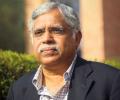
C P Chandrasekhar, who has served on key statistical panels in the past both as a chairman and member, said he was present in the campus when the ruckus broke out on Sunday and found the incident "disturbing" and "unprecedented", and that it further undermined the faith in the system. Somesh Jha reports.

After recording positive growth in September, India's exports declined 5.4 per cent to $24.82 billion in October on account of dip in shipments of petroleum products, gems and jewellery, leather, and engineering goods. Trade deficit in October narrowed to $8.78 billion as against $11.76 billion, as imports also fell 11.56 per cent to $33.6 billion during the month under review.

The Governor said the MPC had voted to maintain its accommodative stance, implying more rate cuts in the future if the need arises.
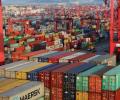
Imports too tumbled by 58.65 per cent to $17.12 billion in April from $41.4 billion in the same month last year, according to the data by the commerce and industry ministry.
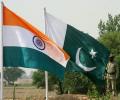
So far, almost every positive development in terms of the bilateral ties has been overtaken by innate hostility that is often driven by popular sentiments.

The report also referred to Prime Minister Narendra Modi's visit to Israel in July 2017.

The economic growth is likely to moderate to 6.1 per cent, slowest in over seven quarters, from 6.6 per cent last year same period.
In a review meeting through video conference with chief ministers and representatives of seven states with a high burden of COVID-19 cases, Modi said having micro containment zones will help states in dealing with the spread of the infection and also allow normal activities to continue.
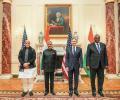
The pressure on India to take a hostile attitude towards Russia and China was not subtle, but it was guarded, observes Ambassador T P Sreenivasan after Monday's 2+2 ministerial meeting in Washington, DC.

India's industrial production contracted by 3.6 per cent in February, official data showed on Monday. According to the Index of Industrial Production (IIP) data released by the National Statistical Office (NSO), manufacturing sector output declined by 3.7 per cent in February 2021. Retail inflation rose to 5.52 per cent in March, mainly on account of higher food prices, government data showed on Monday. The consumer price index (CPI) based retail inflation stood at 5.03 per cent in February.

The meeting on the sidelines of the Shanghai Cooperation Organisation Summit in Bishkek is their first interaction after Modi's re-election following the stunning victory of the BJP in the general elections last month.
